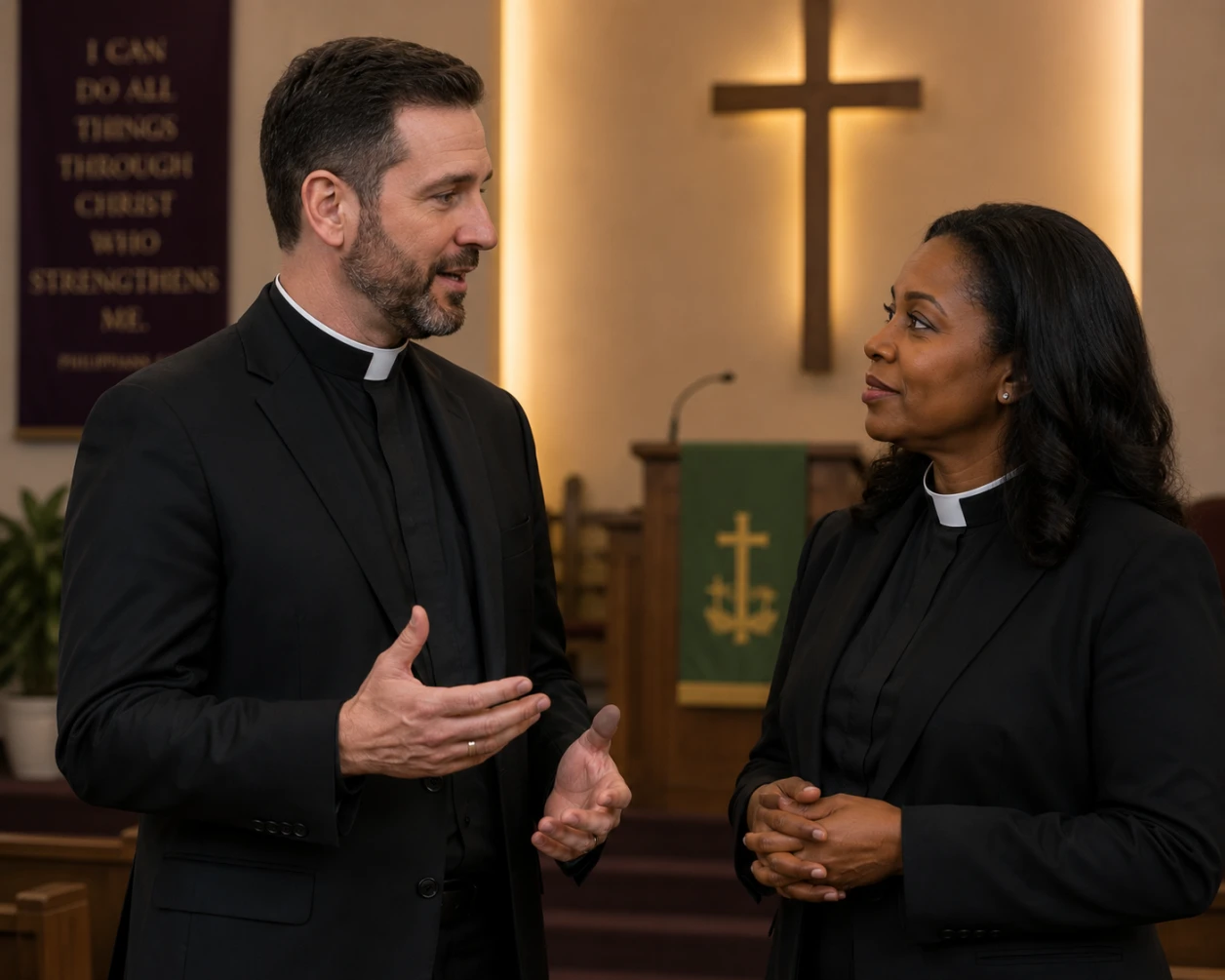
2026 marks the 70th anniversary of women being given full clergy rights in the United Methodist Church (UMC). In other words, it’s been 70 years of recognizing that women and men are equally called by God to be pastors.
There are lots of interesting conversations that can be had about the journey that led to that change, and we might rightly wonder why it took the church so long officially to recognize and affirm this calling of God in the lives of women. However, it’s certainly worth noting that for seven decades (which is significantly longer than I’ve been alive) the United Methodist Church has affirmed that God calls people regardless of gender or biological sex. That’s a recognition that, sadly, some denominations and churches are struggling to affirm even now. Too many churches, even right here in Williamsburg, exclude women from certain elements of church leadership, but I’m proud to belong to a church that sees and affirms God’s calling in all people, including women.
As I reflect on this anniversary of women receiving full clergy rights in the UMC, I am particularly struck by how my life of faith, discipleship, and answering God’s call is unimaginable apart from the female pastors who ministered God’s mercy, grace, and love to me. I was baptized by a woman. When I was in college and discerning a call into ordained ministry, I served as a youth ministry intern at the church near my school, and the youth pastor, who was an ordained deacon, spent time sharing her wisdom and insight with me. Her perspective on God and on ministry shaped much of who I am and how I pastor today. When I was a newly commissioned pastor, my first pastoral appointment was as an associate pastor, and the senior pastor, who patiently and graciously mentored me, was a woman. Some of the people who have most shaped my ministry are women. They are friends who have taught me how to be a better pastor, sustained me through difficult seasons of life, challenged and encouraged me, and collaborated with me in important work.
I would not be the pastor, or the Christian I am today, without God’s work in and through the ministry of United Methodist clergywomen. Any good work that I have done in ministry would be impoverished, less successful, if it weren’t for the impact female pastors have had on me across the years.
Now, at one level, this should be obvious. As we read in Acts 2, God pours out the Holy Spirit on all people, calls men and women to prophesy and proclaim the Good News of Jesus. But, for some reason, powerful people in the church have, across history, sometimes forgotten the radical and inclusive work of Jesus. We have failed to follow the Holy Spirit, and have instead taken certain Scripture passages out of context and used them as an excuse to silence the very voices that God is lifting up.
So, I give thanks for seventy years of clergy rights for women in the United Methodist Church. I give thanks for the women who God has called to be pastors and who have impacted my life and faith for the better. I also give thanks for the women who God has called into other ministry roles – lay leaders and folks stepping up to help the church join in the work of Jesus.
The Good News is that all of us are called by God to join in the work of Jesus. Some of us are called to be pastors. Some of us are called into other work. But all of us have a job to do in the life of the church. All of us are invited to join in the work of Jesus, together putting love into action. And God does not discriminate. As it’s put in the Bible, “God is no respecter of persons.” God calls all of us, each and every one, into a variety of roles and functions, regardless of age, gender, race, class, sexuality, gender identity, ability, economic status, nationality, or whatever other marker the world uses to identify us.
I give thanks that seventy years ago, our church, the UMC, officially recognized and affirmed women who had been called by God to ordained ministry. And I give thanks to be part of a church that is continuing to discover that God calls all people to join in God’s work. I give thanks for many reason. But, perhaps most importantly, I give thanks, because I have been blessed by so many people of so many diverse backgrounds and identities who have answered God’s call and impacted me with God’s love. I thank God for the clergywomen who have blessed my life – and I pray that the church will continue to be more and more open to the ministry of all people, in all places, in a multitude of ways.